Yonsei Institute for Advanced Study

Logo and Menu

Recent Major Publications

[Nanobio Interface] Magnetically Guided Flexible Bioelectronic Probe for Single-Cell Recordings in Multi-Scale Biosystems
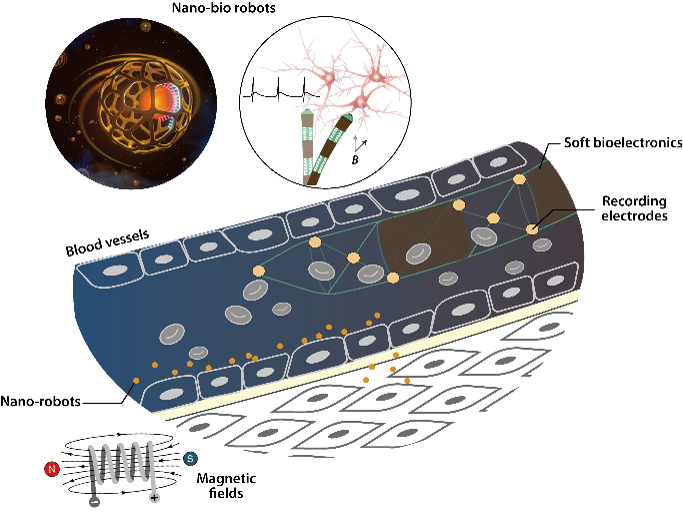
Bioelectronic systems enable label-free monitoring and modulation of cellular activity, providing essential tools for neuroscience and biomedical applications. Nevertheless, many current interfaces are structurally static and lack active positioning capabilities, limiting their adaptability in spatially complex environments. Here, Mag-N-Probe (Magnetically guided Neural-interfacing Probe), a flexible and magnetically actuated bioelectronic system is introduced that enables remote, real-time motion control with sub-micrometer precision and centimeter-scale navigation. The system incorporates ferromagnetic nanoparticles within a pliable mesh framework and utilizes both torque- and gradient force-driven actuation for controlled navigation in confined spaces. This capability permits the repeated targeting of individual neurons for compartment-specific electrophysiological recordings and conformal integration with brain organoids for reliable, multi-channel signal acquisition. By combining magnetic actuation with flexible bioelectronics, Mag-N-Probe provides a versatile and scalable solution for adaptive neural interfacing, applicable to both single-cell studies and 3D tissue environments, thus supporting a wide range of in vitro studies and promising prospects for minimally invasive in vivo applications.

Oct 21, 2025

[Evolutionary Nanomaterials] Molecular Drillers for 2 nm Resolution Nanochannel Perforation of 2D Nanoplates
Perpendicular nanochannel creation of two-dimensional (2D) nanostructures requires highly controlled anisotropic drilling processes of the entire structure via void formation. However, chemical approaches for the creation of porosity and defects of 2D nanostructures have been challenging due to the strong basal plane chemical stability and the use of harsh reactants, tending to give randomly corroded 2D structures. In this study, we introduce Lewis acid–base conjugates (LABCs) as molecular drillers with attenuated chemical reactivity which results in the well-defined perpendicular nanochannel formation of 2D TiS2 nanoplates. With the treatment of LABCs, tris(trimethylsilyl)pnictogens (TMS3P or TMS3As), high resolution perforation of TiS2 nanoplates was achieved while maintaining their initial shape and structures. Such perforated TiS2 nanoplates are tunable in their channel diameter between 4 and 10 nm with 2 nm resolution. With their increased surface area and enhanced adsorption of Li2Sx, perforated TiS2 nanoplates served as a diffusion barrier of lithium–sulfur (Li–S) cells, leading to a 2.5-fold improvement in cell performance compared to pristine TiS2 nanoplates. Our molecular design concept for attenuated reactivity of LABCs is simple and could serve as a new approach for chemical drilling processes of 2D metal chalcogenides.

Jan 6, 2025

[Evolutionary Nanomaterials] Anomalous In-Plane Electrical Anisotropy in Elemental Metal Nanosheets
Two-dimensional (2D) elemental metals, often overlooked owing to their lack of switching or dielectric properties, have the potential to exhibit unique properties unachievable by their bulk counterparts if their microstructure can be controlled. Here we propose an electrodeposition method that utilizes a confined 2D template to prepare elemental metal nanosheets with an aligned grain orientation, resulting in an exceptionally high in-plane electrical anisotropy of >103. Heterogeneous nucleation is initiated and the directed growth of the metal at the cathode is controlled within a channel whose size is smaller than the critical size of the nuclei. This leads to the formation of anisotropic microstructures, and consequently, the nanosheets exhibit anisotropic electrical properties. Unlike conventional field-effect transistors, devices employing a channel with two orthogonally separated conduction paths yield an exceptional on–off switching ratio exceeding 104. Our approach offers a promising route to produce various 2D elemental metals with properties different from those observed in their bulk counterparts and highlights the potential of anisotropic metallic nanosheets as switching elements.

Oct 31, 2024

[Precision Nanomedicine] In Vivo Magnetogenetics for Cell-Type-Specific Targeting and Modulation of Brain Circuits
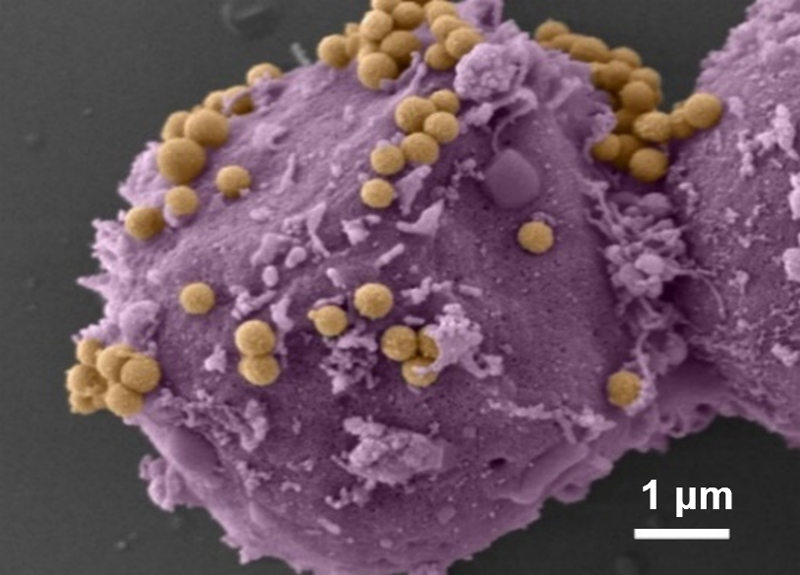
Neuromodulation technologies are crucial for investigating neuronal connectivity and brain function. Magnetic neuromodulation offers wireless and remote deep brain stimulations that are lacking in optogenetic- and wired-electrode-based tools. However, due to the limited understanding of working principles and poorly designed magnetic operating systems, earlier magnetic approaches have yet to be utilized. Furthermore, despite its importance in neuroscience research, cell-type-specific magnetic neuromodulation has remained elusive. Here we present a nanomaterials-based magnetogenetic toolbox, in conjunction with Cre-loxP technology, to selectively activate genetically encoded Piezo1 ion channels in targeted neuronal populations via torque generated by the nanomagnetic actuators in vitro and in vivo. We demonstrate this cell-type-targeting magnetic approach for remote and spatiotemporal precise control of deep brain neural activity in multiple behavioural models, such as bidirectional feeding control, long-term neuromodulation for weight control in obese mice and wireless modulation of social behaviours in multiple mice in the same physical space. Our study demonstrates the potential of cell-type-specific magnetogenetics as an effective and reliable research tool for life sciences, especially in wireless, long-term and freely behaving animals.

Jul 2, 2024

[Nanobio Interface] In-Vivo Integration of Soft Neural Probes Through High-Resolution Printing of Liquid Electronics on the Cranium
Current soft neural probes are still operated by bulky, rigid electronics mounted to a body, which deteriorate the integrity of the device to biological systems and restrict the free behavior of a subject. We report a soft, conformable neural interface system that can monitor the single-unit activities of neurons with long-term stability. The system implements soft neural probes in the brain, and their subsidiary electronics which are directly printed on the cranial surface. The high-resolution printing of liquid metals forms soft neural probes with a cellular-scale diameter and adaptable lengths. Also, the printing of liquid metal-based circuits and interconnections along the curvature of the cranium enables the conformal integration of electronics to the body, and the cranial circuit delivers neural signals to a smartphone wirelessly. In the in-vivo studies using mice, the system demonstrates long-term recording (33 weeks) of neural activities in arbitrary brain regions. In T-maze behavioral tests, the system shows the behavior-induced activation of neurons in multiple brain regions.

Feb 27, 2024

[Evolutionary Nanomaterials] A Magnetically Powered Nanomachine with a DNA Clutch
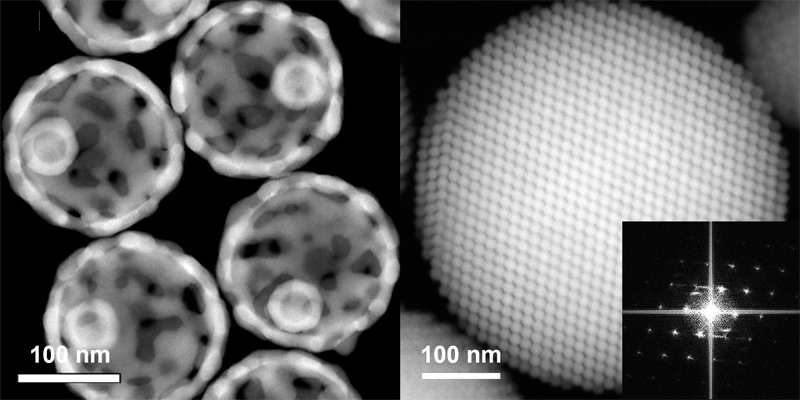
Machines found in nature and human-made machines share common components, such as an engine, and an output element, such as a rotor, linked by a clutch. This clutch, as seen in biological structures such as dynein, myosin or bacterial flagellar motors, allows for temporary disengagement of the moving parts from the running engine. However, such sophistication is still challenging to achieve in artificial nanomachines. Here we present a spherical rotary nanomotor with a reversible clutch system based on precise molecular recognition of built-in DNA strands. The clutch couples and decouples the engine from the machine"s rotor in response to encoded inputs such as DNA or RNA. The nanomotor comprises a porous nanocage as a spherical rotor to confine the magnetic engine particle within the nanospace (∼0.004 μm3) of the cage. Thus, the entropically driven irreversible disintegration of the magnetic engine and the spherical rotor during the disengagement process is eliminated, and an exchange of microenvironmental inputs is possible through the nanopores. Our motor is only 200 nm in size and the clutch-mediated force transmission powered by an embedded ferromagnetic nanocrystal is high enough (∼15.5 pN at 50 mT) for the in vitro mechanical activation of Notch and integrin receptors, demonstrating its potential as nano-bio machinery.

Feb 7, 2024

Research Areas

Evolutionary Nanomaterials

This research field focuses on nanoscale designing and engineering of materials to drive advancements in next-generation technologies across electronics, energy, and biomedicine. By exploring unconventional compositions and architectures, researchers aim to develop materials with enhanced or entirely novel functionalities. This innovation-driven approach offers significant potential for addressing complex scientific and biomedical challenges.
more

  •  
  • M.S. & Ph.D. in Nano
    Biomedical Engineering


    The Department of Nano Biomedical Engineering (Nano BME) provides a cutting-edge education and training in nanoscience and nanomedicine.

    MORE INFO

Global Partnership

MORE INFORMATION

Copyright and Address

  • Instagram  facebook  X  LinkedIn
  • ADDRESS IBS Hall 50 Yonsei-ro, Seodaemun-gu, Seoul 03722
  • TEL +82-2-2123-4743   FAX +82-2-2123-4606
  • E-MAIL ibs@yonsei.ac.kr
  • Copyright © IBS Center for NanoMedicine,YONSEI UNIV.
    ALL RIGHTS RESERVED.

Display Page Loading Image

Top